


Eastward Bound: The Future of Israel-EU Relations Lies in the Indo-Pacific
Updated: Mar 30
Strategic cooperation linking Europe, the Middle East, and the Indo-Pacific may offer a viable path to overcome political rifts over Gaza, while advancing defense, economic, and scientific ties

Relations between Israel and the European Union reached their lowest point in decades in the aftermath of the war in Gaza, which ended in a ceasefire in October 2025. Public rhetoric, parliamentary motions, and diplomatic communiqués reflect a growing sense of estrangement. Yet the strategic logic of partnership remains intact: Europe and Israel both face regional instability in the Middle East and depend on shared economic and energy supply chains.
Furthermore, in recent years, and despite the war in Gaza and growing anti-Israeli sentiment in Europe, commercial ties and scientific collaboration have persisted between both parties, and Europe has even expanded its defense procurement from Israel.[1] The question, therefore, is not whether the relationship still matters – it does – but whether the two sides can adapt it to new strategic and political realities.
Considering the entrenched positions of several EU member-states, including Spain, Ireland, Slovenia, and Belgium, there remains very little political space for bilateral engagement in the post-Gaza war environment. Still, Israel cannot afford to dismiss Europe as “lost,” nor can Europe afford to ignore Israel’s role in its wider geopolitical neighborhood or its contribution to the bloc's scientific research and defense capabilities.
A path forward may lie in shifting the center of gravity of the Europe-Israel relationship from the Palestinian question toward broader strategic collaboration – specifically one that links Europe and the Middle East with the Indo-Pacific through new supply chains and by addressing common defense R&D and production needs. To that end, Israel will need to leverage its partners in the Middle East and the Indo-Pacific to advocate for a European shift.
A Relationship at its Nadir
Europe and Israel have long been bound by shared democratic values, common interests, and deep historical ties. Yet as an earlier analysis of Israel’s relations with Europe has already noted, mutual mistrust runs deep: European officials often question Israel’s adherence to Western norms, while many in Jerusalem view European policies as moralizing, inconsistent, or even discriminatory.[2]
Although the period immediately following the October 7 atrocities offered some brief reprieve, mutual disillusionment soon resumed and later intensified as the war in Gaza continued. The Israel-Europe schism widened, and the continent gradually adopted a pro-Palestinian sentiment that included harsh anti-Israeli messaging. In numerous cases, Jews and Israelis were, and continue to be, targets of harassment and violence,[3] reinforcing a growing perception within Israeli society that Europe is once again becoming unsafe for Jews.
Both Europe and Israel have lost view of the significance of the strategic relations between them
For much of the past four decades, European diplomacy toward Israel has been dominated by an almost singular focus on the Palestinian issue.[4] It was among the very first foreign policy items that that Europe dealt with collectively in the 1970s – and one of the few areas around which its member-states could reach a common position.
This framing continues to shape the European Commission’s approach to this day. Its reluctance to fully endorse the US-brokered Abraham Accords, presumably on the grounds that normalization should only follow a Palestinian peace agreement, illustrates how deeply rooted this policy reflex remains.[5]
The result is a paradox: as Arab states move toward pragmatic cooperation with Israel, Brussels clings to a sequencing logic that is poorly aligned with the region’s geopolitical realities. Furthermore, rather than acknowledging Europe’s strategic interests vis-à-vis Israel, the EU's political leadership has allowed the continent's marketplace of ideas and messaging to be dominated by anti-Israeli and antisemitic narratives.
Meanwhile, Israeli policymakers too often “write off” Europe as irrelevant, overlooking the EU’s influence over trade, technology standards, scientific collaboration, and defense markets that directly affect Israel’s long-term interests.[6]
The Shifting Geopolitical Context
Three recent structural changes are reshaping the strategic backdrop of Europe-Israel relations:
First, Russia’s 2022 invasion of Ukraine and the re-election of President Trump in 2024 upended Europe's collective security paradigm. European countries now must attend to their own security, and are therefore re-arming and expanding defense budgets from roughly 1.5 percent of GDP in 2021 to nearly 2 percent in 2025 and likely 2.3-2.5 percent by 2030.[7] This rearmament drive is accompanied by new initiatives such as the European Defence Industrial Programme (EDIP), aimed at strengthening the continent’s defense-industrial base and reducing dependence on external suppliers.[8] However, until it develops such capabilities, these developments have already resulted in an increase in Israeli defense exports to Europe.
Second, and despite the harsh criticism of Israel across the continent, many European decision-makers realize that the regional realignments in the Middle East involving Israel – both those that began before the war and those evolving from it – serve major European interests.[9] While the overall European attitude towards the Abraham Accords was not positive, the India-Middle East-Europe Economic Corridor (IMEC) initiative, designed to bolster and expand the Accords, shifted Europe’s attitude.[10]
As the war in Ukraine increased European reliance on energy shipments from the Middle East, the continent now sees IMEC as offering new and reliable supply chains. For the first time, strategic cooperation among India, the Gulf, Israel, and Europe appears not only plausible, but best suited to address shared interests. That is the reason why, on the sidelines of the September 2023 G-20 summit in New Delhi, European leaders were keen to sign onto the MoU launching IMEC.[11]
The strategic blows Israel dealt to Iran and its proxies in Lebanon and Syria have also served European interests. The German Chancellor best captured this sentiment during the 12-day Iran-Israel war in June 2025, remarking in a televised interview that Israel was doing the "dirty work […] for all of us" in Iran.[12]
Third, the rise of China is driving Europe to diversify supply chains and expand its presence in the Indo-Pacific. The EU, along with a host of its member-states, including France (in 2018) and Germany and the Netherlands (in 2020), all announced Indo-Pacific strategies linking maritime security, technology, and connectivity.[13] The EU’s flagship vehicle for this outreach is the Global Gateway, launched in 2021 as a €300 billion investment strategy to promote sustainable development and connectivity with partners, and was clearly designed as a democratic alternative to China’s Belt and Road Initiative (BRI).[14]
Europe's Indo-Pacific outreach augments its geopolitical interest in its southern flank, the Middle East. The EU considers the United Arab Emirates (UAE) and Oman in the Arab Gulf as part of the Indo-Pacific, including both in the annual meeting of EU foreign ministers with their Indo-Pacific counterparts.
Together, these structural shifts are likely to substantially impact Europe-Israel relations – drawing Europe closer to Israel both as a security partner and as a bridge to the Middle East and the Indo-Pacific.
IMEC and EU-Israeli Institutional Haggling
When leaders unveiled the IMEC MoU on the sidelines of the G-20 Summit in New Delhi, the initiative embodied a new strategic vision: linking India to Europe via the Gulf, Jordan, and Israel through integrated transport, digital, and energy networks.[15] Although their officials were not present at the signing, the MoU specified the route connecting through Jordan and Israel. For Israel, therefore, IMEC was not merely an infrastructure plan but a geopolitical proposition. It would not only reinforce the Abraham Accords and prepare the ground for their expansion but could also position Israel as a bridge between the Indo-Pacific, the Middle East, and Europe.
However, the October 7 attacks and subsequent two-year war halted this momentum and effectively sidelined Israel’s involvement in the initiative. Thus, while India, the UAE, Saudi Arabia, and the United States continued to meet under the Corridor framework, Israel’s role receded.
Indian diplomats reportedly had to “put their foot down” during an IMEC envoys’ meeting in August 2025 to prevent Israel’s exclusion from the initiative
Although IMEC originated as an Israeli concept to connect Arab Gulf ports to Israel's Haifa port by train via Jordan and Saudi Arabia,[16] Israeli officials have refrained from addressing the topic since October 7. European stakeholders even began floating alternative routes that bypass Israeli territory.[17] Reportedly, Indian diplomats had to “put their foot down” during an IMEC envoys’ meeting in New Delhi in August 2025 to prevent Israel’s exclusion.[18] This incident underscores that Israel's strategic partners can be a reliable asset. Nevertheless, Israel needs to clearly communicate and demonstrate its interest in IMEC.
Meanwhile, European officials have not only sought to push Israel out of IMEC. With the European Commission taking over the lead in the summer of 2025 from the three member-states that co-signed the IMEC MoU, the Commission has placed the policy portfolio under the co-lead of MENA Directorate-General officials that historically hold unfavorable positions towards Israel and clearly resented the Abraham Accords.[19]
Shortly after the EU Commission took over, they began discussing how to involve the Palestinian Authority in the Corridor, despite it not crossing Palestinian territory.[20] Attempts at excluding Israel and artificially drawing the Palestinian issue into the very early phases of IMEC's development demonstrate how pro-Palestinian and anti-Israeli positions are deeply embedded in the EU.
What's in It for Europe?
Europe’s Middle East policy is constrained by competing impulses. The EU Commission, a handful of member-states (notably Ireland, Spain, Slovenia, and Belgium) and a sizeable caucus of the European Parliament, prioritize what is often referred to as "normative diplomacy" regarding the Palestinian issue. Others such as Italy, Czechia, Greece, and Cyprus pursue pragmatic defense and energy partnerships with Israel and additional Gulf and Mediterranean neighbors. With the former group gaining support from mass pro-Palestinian demonstrations, the result has been an approach increasingly wary of association with Israel, even at the expense of major European interests.
This dynamic recently came to light when several European countries sought to expel Israel from the “Horizon Europe” academic partnership program,[21] and Israel and its closer European partners collaborated to prevent Israel’s removal. Considered one of its top performers, Israel has consistently received more funding than it contributes. Amid mounting official and unofficial academic boycotts in Europe against Israel, averting removal from “Horizon” shows that functional cooperation resulting in mutual and tangible benefits can shield institutionalized relations.[22]
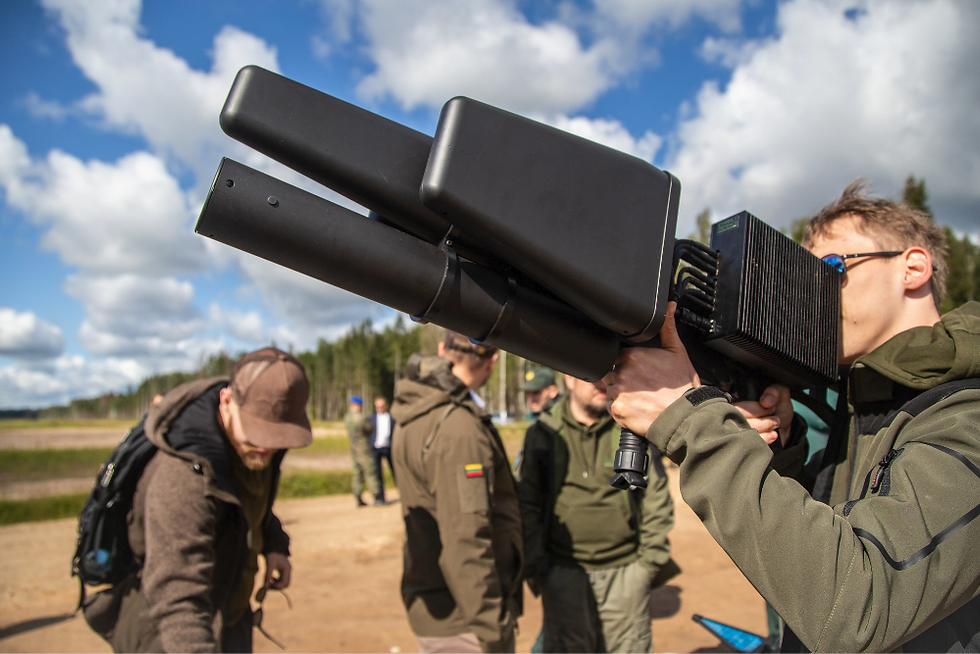
Yet what has been increasingly dubbed as "Europe’s defense awakening," driven by the events described above, now presents Israel with a new avenue of engagement. EU defense budgets are set to considerably rise in the next few years. Through its "ReArm Europe" plan,[23] the EU's doctrine of "industrial anchoring" seeks to ensure that most defense production occurs within the continent.[24] However, under certain conditions, projects eligible for EU support may also include non-EU partners.
This has created room for Israel’s defense industry, especially in air defense, unmanned systems, and cyber security, fields where it has proven expertise and European demand is surging. Israeli defense firms have already worked on integrating into the European defense ecosystem. Israel's RAFAEL co-developed the “EuroSpike” anti-tank system with German partners. According to media reports, Israel Aerospace Industries (IAI) has registered subsidiaries in Europe. One such company, registered in Greece, participated in some 15 projects supported by the European Defense Fund.[25]
For Europe, closer defense-industrial cooperation with Israel would enhance resilience and innovation, while for Israel it would anchor its defense sector within Europe’s rearmament ecosystem. Ideally, these trends would have allowed Israel to pursue the institutional anchoring of this relationship through a Security and Defense Partnership (SDP), a new EU institutional platform for collaboration with non-EU partners that was introduced for the first time in 2024. The current political climate, however, is not conducive to such efforts. Nevertheless, as both Israel and Europe deepen defense partnerships with like-minded Indo-Pacific partners, new opportunities for joint ventures and trilateral initiatives are emerging.
Tying a Trilateral Knot
The growing defense collaboration between European and Indo-Pacific countries should come as little surprise. Japan, India, South Korea, and other Indo-Pacific countries are all ramping up their defense spending as well, driven primarily by China’s military expansion.[26] Similarly, Israel too has increased its defense collaboration in the Indo-Pacific, most notably with India.
Japan, which for decades has capped defense spending at 1% of GDP, is undertaking its most significant military build-up since the Second World War. Tokyo is doubling its defense budget to 2% of GDP by 2027, making it one of the world’s top five defense spenders. India, meanwhile, has steadily increased defense outlays for two decades, placing it among the five largest military budgets globally. New Delhi allocates roughly 2% of GDP to defense. South Korea is the region’s third major spender, maintaining defense expenditures above 2.7 percent of GDP.[27]
Taken together, Indo-Pacific defense spending is large, sustained, and still rising, making the region a pivotal arena for defense-industrial partnerships with Europe and with Israel. Indeed, Europe has already signed SDPs with Japan and South Korea,[28] and France has deep defense R&D and production collaborations with India.
A core example of European-Indo-Pacific defense cooperation is the Global Combat Air Program (GCAP), a joint venture of the UK, Japan, and Italy to develop a 6th-generation combat aircraft by 2035. GCAP demonstrates that European and Indo-Pacific partners are already willing to collaborate on highly sensitive defense-industrial projects.[29]

Integrating the Indo-Pacific into the strategic backdrop of EU-Israel relations would not only serve concrete interests of all parties involved, but would also improve Israel's standing in Europe by displaying tangible benefits of engagement. Moreover, current Israeli ventures with partners in Europe, the Indo-Pacific, and the Middle East mostly involve a similar catalogue consisting of air/missile defense, advanced munitions, and cybersecurity. Notably, since 2020 and through 2024, India has emerged as the leading market of for Israeli defense exports.[30] Meanwhile, Japan has been designated a strategic destination for Israeli defense exports.[31]
Returning to the GCAP example – while Israel would likely refrain from officially joining this project due to the country’s close collaboration with the U.S. defense industry, it could participate in GCAP indirectly by contributing to the development of high-end subsystems (e.g., electronic warfare) through the Israeli industry's subsidiaries in Europe.
Linking Europe’s connectivity and defense priorities to Israel’s budding relations in the Middle East and the Indo-Pacific offers mutual benefit: Europe gains a reliable partner in its southern neighborhood, while Israel gains access to investment and strengthens its involvement in existing and new markets. Trilateral, quadrilateral, or small-group defense and technology initiatives involving Europe, Israel, and Indo-Pacific partners could generate substantial practical and political dividends.
What Needs to be Done
Reorienting EU-Israel relations toward a strategic partnership requires both acknowledging Europe’s internal divides and Israel’s own, often self-defeating, perceptions.
EU member-states that consistently maintain anti-Israeli stances are unlikely to soften them in the near term. Rather than engaging in direct confrontation with these outliers, Israel should focus on broadening the coalition of pragmatic partners within Europe – particularly in Central and Eastern European countries and with its Mediterranean partners.
If current trajectories persist, EU-Israel relations risk settling into a pattern of "managed estrangement," which would serve neither side
To influence EU institutions, Israel must also rely on the diplomacy of its key partners. The EU’s growing engagement with the Indo-Pacific and Arab Gulf states offers a conduit: Jerusalem can ask its partners to signal to Brussels that cooperation with Israel on connectivity and defense is essential. As mentioned above, this is what India recently did when it intervened vis-à-vis IMEC stakeholders to prevent Israel’s exclusion.
In this sense, Israel’s partners can do the diplomatic heavy lifting that it itself cannot currently undertake on its own. One option, for example, would be for the UAE and Israel to revisit the initiative to establish a minilateral framework with Japan – derailed by the events and aftermath of October 7 – and incorporate a European partner.
Precedents already exist: France and India have established trilateral cooperation frameworks with both Australia and, separately, also with the UAE.[32] India could suggest to France, its second largest technology-transfer partner, to establish another trilateral framework, this time with its third largest technology-transfer partner, Israel. While the current political circumstances might not yet permit such a collaboration, domestic developments in France, Israel, or both could make it feasible.
For this strategy to succeed, Israel must also adjust its own outlook. Dismissing Europe as terminally hostile has become a self-defeating knee-jerk reaction. While European politics can be exasperating, Israel benefits considerably from existing collaboration and stands to gain even more from growing European defense expenditure. To that end, Israel needs to articulate a positive strategic vision for cooperation with Europe – one that goes beyond reacting to anti-Israel bias.
If current trajectories persist, EU-Israel relations risk settling into a pattern of "managed estrangement" – limited functional cooperation alongside political alienation. This would serve neither side. Europe would struggle to project influence in the Middle East and Indo-Pacific without a capable regional partner, while Israel would risk weakening, or even losing, a central pillar of its Western identity.
Reframing the relationship around the Indo-Pacific connection offers a path out of this impasse. It broadens the agenda, introduces new stakeholders, and grounds cooperation in tangible interests rather than moral conditionality. This approach does not erase the Palestinian issue but might prevent it from monopolizing the relationship. Over time, broader engagement and the gradual rebuilding of trust could even create space for more constructive political dialogue, allowing both parties to realize the strategic potential of the partnership.
Tommy Steiner is the Policy Director of SIGNAL Group, a think tank that empowers Israel to address China's rise on the world stage. Based in Israel, Tommy is concurrently an Honorary Fellow of the Middle East Institute (MEI) at the National University of Singapore and an Adjunct Lecturer on International Relations and Strategic Studies at the Lauder School of Government, Diplomacy and Strategy at Reichman University. Before joining SIGNAL Group, Tommy was a senior research fellow at Reichman University’s Institute for Policy and Strategy. A member of the founding team of the Annual Herzliya Conference Series, Tommy managed the Conference series from 2007 through 2013 – a period during which the Conference was considered one of the top international policy conferences. Tommy served as the executive director of the Atlantic Forum of Israel, a network-based policy organization that promoted and advanced Israel's relations with the Transatlantic Community and Europe, and which was especially instrumental in enhancing NATO-Israel relations.
Tommy earned his MA (cum laude) in International Relations from the Hebrew University of Jerusalem and is the recipient of the Yehoshafat Harkaby Award from the Hebrew University's Leonard Davis Institute for International Relations.
Notes
* The appearance of U.S. Department of Defense (DoW) visual information does not imply or constitute DoW endorsement.
[1] Yuval Azulay, “Israeli arms exports hit record $14.8 billion despite boycotts and war criticism,” Calcalist, 4 June 2025. https://www.calcalistech.com/ctechnews/article/zgm02i4wt
[2] Tommy Steiner, “The Future of Israel’s Strategic Relations with Europe,” inFocus Quarterly, March 2015. https://jewishpolicycenter.org/2015/02/28/israel-europe-relations/
[3] Liv Stroud, “Antisemitic incidents surge across Europe and the world, ADL's J7 Task Force report shows,” EuroNews, 8 May 2025. https://www.euronews.com/2025/05/08/antisemitic-incidents-surge-across-europe-and-the-world-adl-report-shows; “MEPs and Commission to discuss rise of antisemitism in Europe,” Newsletter - 6-9 October 2025, European Parliament, 2 October 2025. https://www.europarl.europa.eu/news/en/agenda/plenary-news/2025-10-06/13/meps-and-commission-to-discuss-rise-of-antisemitism-in-europe; Jon Henley, " Israeli Football Fans and the Violence in Amsterdam: What We Know," The Guardian, November 12, 2024. https://www.theguardian.com/world/2024/nov/11/what-happened-amsterdam-israeli-football-fans
[4] Anders Persson, EU Diplomacy and the Israeli-Arab Conflict, 1967–2019, Edinburgh: Edinburgh University Press, 2020.
[5] Emmanuel Navon, "Leveraging the Abraham Accords for Israel’s Relations with Europe," September 29, 2022. https://jiss.org.il/en/navon-leveraging-the-abraham-accords-for-israels-relations-with-europe/
[6] Sasha Vakulina, "Europe has essentially become irrelevant, Israeli Prime Minister Netanyahu tells Euronews," Euronews, 5 October 2025. https://www.euronews.com/2025/10/05/europe-has-essentially-become-irrelevant-israeli-prime-minister-netanyahu-tells-euronews
[7] Members' Research Service, “EU defence funding,” European Parliament Directorate General for Parliamentary Research Services, 8 October 2025. https://epthinktank.eu/2025/10/08/eu-defence-funding/
[8] https://defence-industry-space.ec.europa.eu/eu-defence-industry/edip-dedicated-programme-defence_en
[9] Julien Barnes-Dacey, Ellie Geranmayeh, and Hugh Lovatt, "Pieces in Motion: Rebalancing Power in a New Levantine Order," Policy Brief, European Council on Foreign Relations, 9 May 2025. https://ecfr.eu/publication/pieces-in-motion-rebalancing-power-in-a-new-levantine-order/
[10] Alberto Rizzi, "The Infinite Connection: How to Make the India-Middle East-Europe Economic Corridor Happen," Policy Brief, European Council on Foreign Relations, 23 April 2024. https://ecfr.eu/publication/the-infinite-connection-how-to-make-the-india-middle-east-europe-economic-corridor-happen/?utm_source=chatgpt.com
[11] In the run-up to the G-20, Italy was not involved in the diplomatic interactions regarding IMEC and was not destined to be part of the MoU signing alongside the EU, Germany, and France. Italian diplomats were outraged for their country being the sole European G-7 member excluded from the signing. They then staged a successful campaign in New Delhi to have Prime Minister Giorgia Meloni join her German and French peers and co-sign the MoU. Based on the author’s private interview with an Italian diplomat on Prime Minister Meloni's entourage at the summit in New Delhi.
[12] ZDFHeute, "Merz über Trump, Nahost und Ukraine," 16 June 2025. https://www.zdfheute.de/video/zdfheute-live/g7-gipfel-kanada-merz-trump-video-100.html?at_medium=Social%20Media&at_campaign=Twitter&at_specific=ZDFheute
[13] Maaike Okano-Heijmans, “The Netherlands and the EU turn to the Indo-Pacific,” Clingendael, 14 July 2021. https://www.clingendael.org/publication/netherlands-and-eu-turn-indo-pacific
[14] Stuart Lau and Hanne Cokelaere, "EU launches ‘Global Gateway’ to counter China’s Belt and Road," Politico, 15 September 2021. https://www.politico.eu/article/eu-launches-global-gateway-to-counter-chinas-belt-and-road/
[15] https://bidenwhitehouse.archives.gov/briefing-room/statements-releases/2023/09/09/memorandum-of-understanding-on-the-principles-of-an-india-middle-east-europe-economic-corridor/
[16] Mahdi Ghuloom, "Railways and Realignments: Charting the Gulf’s Inclusive Path into the IMEC," Expert Speak, ORF Middle East, 30 October 2025. https://orfme.org/expert-speak/railways-and-realignments-charting-the-gulfs-inclusive-path-into-the-imec/
[17] Abla Abdel-Latif, Sherine El-Naggar & Racha Seif El-Dine, "Introducing Egypt to the India-Middle East-Europe Corridor: A New Paradigm for Connectivity," The Egyptian Center for Economic Studies, 2025. The above report was officially presented at a conference organized by a prominent Indian think-tank, ORF, and co-sponsored by the French government.
[18] Author’s interview with Indian diplomat.
[19] Daniel Schwamenthal, "The EU's Approach to Israel: Even-Handed or Heavy-Handed Relations?" AJC, January 7, 2019. https://www.ajc.org/news/the-eus-approach-to-israel-even-handed-or-heavy-handed-relations
[20] Tommy Steiner, "Reclaiming the India-Middle East-Europe Economic Corridor," JNS, 20 October 2025. https://www.jns.org/reclaiming-the-imec/
[21] See for example: Directorate-General for the Middle East, North Africa and the Gulf, “Commission proposes partial suspension of Israel's association to Horizon Europe,” European Commission, 29 July 2025. https://north-africa-middle-east-gulf.ec.europa.eu/news/commission-proposes-partial-suspension-israels-association-horizon-europe-2025-07-29_en#email
[22] Shahar Ilan, "Horizon is our academic oxygen. It is a matter of life and death for Israeli academia," CTECH, 26 May 2025. https://www.calcalistech.com/ctechnews/article/03drytxw3
[23] “Questions and answers on ReArm Europe Plan/Readiness 2030,” European Commission, 29 May 2025. https://ec.europa.eu/commission/presscorner/detail/en/qanda_25_790
[24] Hugo Erken, Frank van Es, Elwin de Groot, and Lennart de Jong, "Europe in the New NATO Era," SUERF Policy Note, No. 372, July 2025. https://www.suerf.org/wp-content/uploads/2025/07/SUERF-Policy-Note-372-_-Erken_van-Es_de-Grot_de-Jong.pdf
[25] Simone De La Feld, "EU funds Israel’s arms giant, but assures: ’No funds for the war in Gaza’," EU News, 12 June 2025. https://www.eunews.it/en/2025/06/12/eu-funds-israels-arms-giant-but-assures-no-funds-for-the-war-in-gaza/
[26] Janes, "Feature: Shifting Geopolitics Impacts Asia-Pacific Defense Spending," 22 April 2025. https://www.janes.com/osint-insights/defence-and-national-security-analysis/feature-shifting-geopolitics-impacts-asia-pacific-defence-spending
[27] Xiao Liang et al., Trends In World Military Expenditure, 2024, SIPRI Fact Sheet, April 2025, p. 2. https://www.sipri.org/publications/2025/sipri-fact-sheets/trends-world-military-expenditure-2024
[28] “EU Security and Defence Partnerships,” EEAS, 29 September 2025. https://www.eeas.europa.eu/eeas/eu-security-and-defence-partnerships_en
[29] Darshana M. Baruah and Veerle Nouwens, "Europe and the Indo-Pacific: New Opportunities for a ‘Special Relationship’," IISS, 29 July 2025. https://www.iiss.org/online-analysis/online-analysis/2025/07/europe-and-the-indo-pacific-new-opportunities-for-a-special-relationship/
[30] Dean Shmuel Elmas, "India and Israel's Winning Combination," Globes, 11 December 2025. https://en.globes.co.il/en/article-india-and-israels-winning-combination-1001529069
[31] Dean Shmuel Elmas, "Israel's Defense Industry Targets Japan," Globes, 21 May 2025. https://en.globes.co.il/en/article-israels-defense-industry-targets-japan-1001511040
[32] “Bilateral Brief,” Consulate General of India in Marseilles, France, n.d. https://www.cgimarseille.gov.in/page/bilateral-brief/
Comments