


Hungary’s Political Turn Brings Hope at Home – And Raises Concern in Jerusalem
Incoming Prime Minister Péter Magyar has made repairing ties with the European Union a top priority, with €18 billion in frozen funds hanging in the balance. Aligning more closely with Brussels is likely to come at the expense of the vetoes his predecessor, Viktor Orbán, routinely used to block anti-Israel measures within EU institutions. The shift could narrow Israel’s diplomatic room for maneuver and weaken its standing in Europe
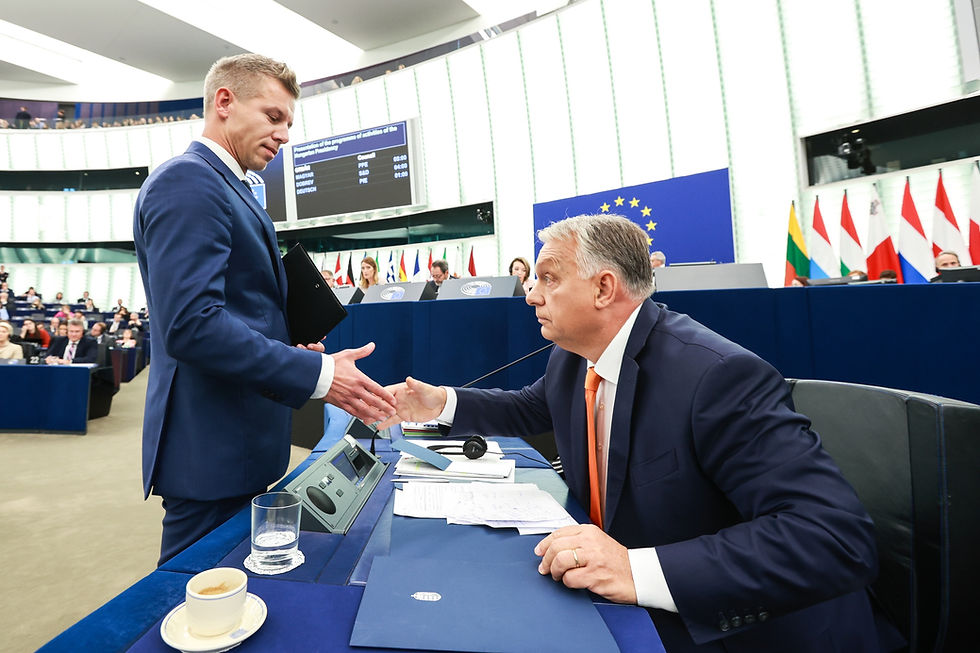
Péter Magyar’s landslide victory in Hungary’s 12 April 2026 general election reflects a convergence of political and economic frustrations: widespread fatigue after 16 years of Prime Minister Viktor Orbán’s rule, coupled with deep public dissatisfaction over the steady deterioration of living standards.
Yet the slogan embraced by Magyar’s supporters – “Ruszkik haza!” (“Russians, go home!”),[1] which became so popular that it was reportedly heard even at several pro-Orbán rallies – points to something broader than domestic discontent. Rather, it also reflects a growing desire among Hungarians for a fundamental shift in foreign policy. After years of confrontation with Brussels and a steady rapprochement with Moscow and Beijing, Magyar’s victory has been attributed in part to his pledge to reverse Hungary’s pro-Russian and increasingly anti-European trajectory.
This article examines the factors behind Magyar’s path to premiership and the foreign policy trajectory he is expected to pursue upon taking office. To address Hungary’s fragile political and economic foundations – a central theme of his successful election campaign – Magyar is likely to prioritize renewed engagement with the European Union and the liberal West. For Israel, the most immediate implication may be the loss of the diplomatic protection Orbán routinely provided by vetoing EU measures critical of Israel. Without that diplomatic shield, Israel could find its position within Europe significantly more vulnerable.
An insider’s path to victory
Magyar’s sweeping victory, and that of his “Tisza” party, which secured 141 of the Hungarian parliament’s 199 seats, rested on its ability to forge an unlikely coalition of three distinct social and political constituencies. All were united primarily by their dissatisfaction with Viktor Orbán’s 16 years in power.
The first was a liberal, pro-Western bloc composed largely of younger voters and residents of major urban centers, who viewed Magyar as a vehicle for dismantling entrenched corruption and restoring democratic norms.
The second consisted of conservative voters, including many former Orbán supporters in Hungary’s rural periphery. Disillusioned by what they saw as the growing oligarchic excesses of the Orbán era, they embraced Magyar as an authentic conservative figure who could not easily be dismissed as a “non-patriot.”
The third constituency was economically driven and cut across ideological lines. Focused on the deterioration of public healthcare and education, the rising everyday costs, and declining living standards, these voters were motivated less by ideology than by a desire for more effective governance and tangible economic improvement.
What ultimately tipped the scales in Magyar’s favor, however, was his unique political profile. A longtime conservative and former senior figure within Orbán’s “Fidesz” party, Magyar possessed an intimate understanding of Hungary’s governing apparatus and the political networks that sustain it. This background largely shielded him from Fidesz’s efforts to portray him as a foreign-backed agent or an opponent of Hungarian national interests. More importantly, it allowed him to penetrate deep into conservative strongholds that had traditionally formed the backbone of Orbán’s electoral coalition.[2]
Even the name of Magyar’s party, "Tisza," was carefully chosen. Officially, it draws on the Hungarian words tisztelet (“respect”) and szabadság (“freedom”), two concepts central to the party’s political platform. The dual meaning was intended to signal a connection to Hungary’s historical roots and national identity while challenging Fidesz’s longstanding claim to a monopoly on patriotic politics.
Recent Hungarian political history suggests that a liberal or explicitly left-wing challenger would have struggled to defeat Orbán’s political machine. In previous elections, Orbán successfully framed liberal opposition figures as threats to Hungary’s national and religious identity. By contrast, Magyar positioned himself as the only candidate capable of carrying out a genuine political housecleaning and dismantling the country’s centralized system of patronage and corruption, while reassuring voters that such reforms would not come at the expense of Hungary’s traditional identity or result in the wholesale adoption of a Brussels-driven liberal agenda.
Dismantling the three pillars of Orbánism
When Magyar takes office in mid-May 2026, he will inherit what political scientists often describe as a “captured state”[3] – a system in which public institutions and state resources have been systematically reshaped to serve partisan and oligarchic interests rather than the broader public good. His first challenge will be to use his mandate to deliver tangible improvements to Hungarian citizens’ lives.
Armed with a parliamentary supermajority exceeding two-thirds of the legislature, Magyar has the power to amend the constitution and replace senior officials appointed during the Orbán era. The political question is whether he can translate that power into economic results that voters can feel.
Beyond economic hurdles, the new government is expected to face a prolonged institutional struggle. This will likely include constitutional reforms and efforts to replace key officeholders widely viewed as loyal to Orbán, including the president, the chief justice, the president of the Constitutional Court, and others. At the same time, Magyar will have to contend with a state bureaucracy that has been shaped by over a decade-and-a-half of Fidesz rule.
A central component of the new prime minister’s domestic agenda is the dismantling of the oligarchic networks that flourished under Orbán. In Magyar’s view, these networks rest on three mutually reinforcing pillars: wealth, power, and prestige. Wealth refers to the concentration of state resources and public assets in the hands of politically connected elites. Power stems from overwhelming dominance of the media landscape and the ability to shape public discourse. Prestige derives from the distribution of social status, professional advancement, and institutional influence as rewards for political loyalty. Dismantling the “captured state” architecture is widely seen as a prerequisite for meaningful institutional reform, though few expect the beneficiaries of the existing system to relinquish their advantages without resistance.
At the same time, Magyar appears to regard the rollback of Orbán-era propaganda mechanisms as an urgent strategic priority. During the former prime minister’s tenure, the government consolidated control over state broadcasters and cultivated a network of media outlets broadly aligned with Fidesz.[4] Magyar has repeatedly described Hungary’s state media as a “factory of lies” and has pledged to establish a genuinely independent public broadcasting authority aimed at reducing partisan influence over the country’s information space.[5]
Yet the success of Magyar’s ambitious reform agenda ultimately hinges on one factor above all others: Hungary’s economic recovery. And that, more than anything else, runs through Brussels.
A strategic reversal in foreign policy
Unlike the Orbán government, which frequently relied on confrontations with foreign actors as a tool of domestic political survival, Magyar’s administration will require international stability to halt Hungary’s economic decline and restore the functioning of its civilian institutions. The most important actor in this regard remains the European Union.
In December 2022, Brussels froze approximately €18 billion in funds earmarked for Hungary, citing systemic corruption and concerns over judicial independence under the Orbán government. The suspended funds include roughly €10 billion from strategic recovery programs and another €8 billion from infrastructure and development mechanisms.[6] The political survival of Magyar’s government will depend heavily upon securing the release of these resources.
As a result, the most consequential shift in Hungarian foreign policy is likely to be the replacement of Orbán’s confrontational approach toward the EU with a strategy of engagement. It should be emphasized that this does not represent a liberal ideological conversion on Magyar’s part; he will continue to promote a conservative, right-leaning agenda and to resist Brussels on issues he views as touching directly on Hungarian sovereignty and national interests.
The difference lies in approach rather than substance. Magyar's is better understood as institutional pragmatism: gaining influence through coalition-building, negotiation, and established diplomatic channels rather than through the frequent use of vetoes and public confrontation.
Migration policy offers an early example of this distinction. Magyar has claimed he will maintain a restrictive stance on immigration, but has made clear that he intends to pursue that objective in a different fashion than his predecessor, who did not seek a legal solution for the problem, costing Hungary substantial sums in fines.[7]
The contrast is even sharper when it comes to Hungary’s use of the veto power available to all EU member states. Orbán frequently deployed that tool as an ideological weapon against Brussels, including by blocking aid packages for Ukraine. Magyar, by contrast, appears to view such diplomatic assets as political capital that should be spent strategically. The clearest indication of this shift is his pledge to bring Hungary into the European Public Prosecutor’s Office (EPPO), a move intended to demonstrate a genuine commitment to combating institutional corruption and, in turn, help unlock frozen EU funds.[8]
Similarly, Budapest’s obstruction of European aid to Ukraine is expected to give way to a legal mechanism known as constructive abstention, which would allow the European Union to continue supporting Kyiv without requiring direct Hungarian participation or endorsement (see discussion below).
Finally, Magyar’s appointment of Dr. Anita Orbán as foreign minister and deputy prime minister sends an important signal to European institutions. Orbán served as Hungary’s ambassador-at-large for energy security between 2010 and 2015 under the previous government (despite sharing a surname, she is not related to the former prime minister). However, she later distanced herself from the administration after it deepened Hungary’s dependence on Russian energy.[9]
Orbán's mandate is clear: to reintegrate Hungary within the Western alliance system and reduce the country’s dependence on Russian energy. Her appointment is intended to signal that the new government will abandon the role of Europe’s internal spoiler – a role many critics associated with Budapest under Viktor Orbán – and instead become a pragmatic partner committed to deeper continental integration.
The roadmap back to European mainstream
Immediately after his election victory, Magyar announced the European capitals he intends to visit at the outset of his premiership. Both the choice of destinations and the order in which he plans to visit them offer a revealing glimpse into how he intends to bring Hungary back to the European mainstream.
The new prime minister's decision to make Warsaw his first foreign destination symbolizes a desire to build a values-based alliance in Central and Eastern Europe. Magyar appears to view Poland as a regional model for reversing democratic backsliding and restoring trust with European institutions, following the path pursued by Polish Prime Minister Donald Tusk after his return to power in 2023.[10] It also reflects Magyar’s ambition to revive the Visegrád Group (V4) as a pragmatic and democratic bloc of shared interests rather than as an anti-Brussels coalition centered on veto politics.
His next stop will be Brussels, the central arena for negotiations over the release of billions of euros in frozen EU funds.[11] Any positive signal regarding the unfreezing of these resources, even in principle, would provide early proof that the new prime minister is delivering on his campaign promises. In fact, before formally taking office, Magyar met with President of the European Commission, Ursula von der Leyen, on 29 April 2026. The meeting, described by both sides as “productive and constructive,” reportedly underscored the Commission’s willingness to release the frozen funds if Budapest implements measurable and immediate reforms.[12] Magyar is now seeking a political agreement by the end of May, as missing key administrative deadlines could result in Hungary permanently losing access to roughly €10 billion in EU funding.[13]

According to both Hungarian and European media analyses, Vienna was chosen as the third destination in order to facilitate the rapid restoration of investor confidence. Austria remains one of Hungary’s largest foreign investors and, by many accounts, one of the countries most affected by Orbán-era economic policies.[14] For years, Austrian corporations and financial institutions faced punitive taxation and regulatory interventions that critics argued were designed to transfer market share to business networks aligned with Fidesz.[15]
A high-profile visit to Vienna would therefore signal the end of Hungary’s oligarchic economic model and the beginning of a more business-friendly environment. At the same time, it would further distance Budapest from the pro-Russian orientation associated with the Orbán years and strengthen diplomatic ties with a neighboring EU member state whose support could prove valuable in negotiations with Brussels over the release of frozen funds.
Taken together, these planned visits highlight Magyar’s diplomatic realism. His objective appears to be the advancement of a conservative political agenda from within European institutions rather than in opposition to them. He is expected to continue defending Hungarian sovereignty against what many conservatives view as progressive overreach from Brussels on issues such as education and gender policy. The crucial difference from the Orbán era is that these disputes are likely to be conducted within Europe’s institutional frameworks, rather than through recurring veto crises that subordinate broader national interests to political confrontation.[16]
Navigating Washington and NATO
While Magyar’s path toward rebuilding relations with Europe appears relatively straightforward, he faces a more complicated reality with another crucial ally: the United States. His election removed President Donald Trump’s closest political ally in Europe from power, leaving the incoming prime minister with the challenge of building a constructive relationship with Washington without undermining efforts to restore Hungary’s ties with Brussels.
In recent years, Washington D.C.-Budapest relations became increasingly tied to the personal and ideological bond between Trump and Viktor Orbán. During his years in office, Orbán transformed Budapest into a hub for the American populist right in Europe, often cultivating relationships that bypassed traditional institutional channels in Washington.[17] One of the most notable examples of the Trump administration’s support came when Vice President J. D. Vance traveled to Budapest just days before the 12 April election in an effort to bolster support for the incumbent prime minister.
Magyar is expected to pursue a different approach. Rather than anchoring relations in personal rapport with the U.S. president, he appears intent on building ties with Washington around Hungary’s national interests and a more independent foreign policy posture. Speaking the day after his election victory, Magyar remarked: “I myself am not going to call him [Trump]. But if he or anyone else from the US administration contacts the Tisza administration, we will be available.”[18]
Yet even amid political uncertainty, the most urgent security challenge facing Magyar’s government may be the restoration of trust with the United States intelligence community and with NATO. Under Orbán, Hungary’s foreign policy – particularly its direct channels to Moscow and alleged failure to adequately address Russian cyber intrusions targeting state infrastructure – contributed to growing concerns among Western partners about intelligence security.[19] Over time, those concerns reportedly led to Hungary’s quiet exclusion from several sensitive intelligence-sharing circles.[20]
Without targeted efforts to remove compromised networks from state institutions and secure a renewed vote of confidence from both American and leading European intelligence agencies, Budapest’s de facto isolation from key transatlantic decision-making forums is likely to persist. Such a situation would pose a significant strategic challenge, as diminished trust in Washington and NATO would weaken Hungary’s influence not only within the alliance but also within the European Union itself.
Caught between Moscow and Beijing
Despite Magyar’s pledge to reorient his country toward the European Union and the liberal West, his effort to revive the Hungary’s economy will collide with a geopolitical reality shaped by years of deep structural dependence on Eastern powers. In its quest for political survival, the Orbán government embedded Hungary within a network of economic dependencies. The country became heavily reliant on Moscow for oil, gas, and nuclear power, while Beijing transformed Hungary into a European manufacturing hub for China’s electric vehicle sector through investments by companies such as BYD and CATL. Major infrastructure projects, including the Russian-financed expansion of the “Paks II” nuclear power plant and the Chinese-backed Budapest–Belgrade railway, further deepened those ties.
Unlike Orbán, Magyar does not appear willing to accept this dependence as fait accompli. However, a rapid withdrawal of Chinese investment or an abrupt termination of Hungary’s energy arrangements with Moscow could trigger severe economic disruption and jeopardize tens of thousands of jobs. As a result, Magyar’s strategy for restoring Hungarian sovereignty is unlikely to rely on a rapid and dramatic rupture.
Instead, the new prime minister, working alongside his foreign minister Anita Orbán, an energy expert, is expected to pursue a policy of controlled decoupling. The first stage would involve leveraging newly released EU funds to reduce Hungary’s dependence on Russian energy and diversify its sources of supply.[21]
At the same time, Magyar has outlined what he describes as a policy of pragmatic recalibration toward Chinese investment. In his first international press conference after the election, he stressed that Hungary would not sever economic ties with Beijing and had no intention of shutting down existing large-scale industrial projects. However, he also made clear that continued Chinese investment would be conditioned on full compliance with Hungarian law and EU regulations, particularly in the areas of environmental protection, labor rights, and public health standards.
The new government also intends to dismantle what critics describe as the Orbán-era enclave economy, in which Chinese firms operating in Hungary relied heavily on imported capital and foreign labor, while generating limited benefits for the domestic economy. To address this, Budapest is expected to demand greater transparency and encourage the integration of Hungarian suppliers into Chinese-led production chains. The broader objective is to strip Chinese investments of the political immunity they often enjoyed under Orbán and subject them to Western regulatory and market standards, while preserving the macroeconomic stability Hungary needs to avoid further economic turbulence.[22]
Europe’s central fault line: Ukraine
While the Orbán government’s anti-Western rhetoric may be a thing of the past, Hungary’s core security and economic interests regarding the Russia–Ukraine war remain largely unchanged. Budapest continues to oppose the deployment of Hungarian troops or the transfer of its weapons systems to the battlefield. It also firmly maintains its ban on the transit of lethal military equipment through its territory into Ukraine. At the same time, Magyar’s government recognizes that repairing relations with Brussels will require a more cooperative approach on one of Europe’s most sensitive issues.
To reconcile those competing priorities, Magyar is expected to rely heavily on the EU’s mechanism of constructive abstention. Under this legal provision, a member state may refrain from supporting a foreign-policy or security decision that requires unanimity without blocking it through a veto, while accepting that the decision remains binding on the Union as a whole.[23] Hungary has used this mechanism only sparingly in the past, but under Magyar it is likely to become a regular feature of Budapest’s approach to the war in Ukraine.[24]
In practice, this would mean that Hungary would no longer obstruct EU efforts to support Kyiv while ensuring that Hungarian resources and territory remain outside the conflict. Magyar has already signaled this shift by declaring that he would not block a proposed €90 billion European loan package for Ukraine or veto future aid initiatives.[25] At the same time, Budapest would seek opt-outs ensuring that Hungarian taxpayer funds are not used for direct arms transfers and that such shipments do not transit Hungarian territory.
Magyar is also pursuing a more pragmatic approach toward Kyiv. Rather than using the status of the Hungarian minority in Ukraine’s Transcarpathia region (Kárpátalja in Hungarian) as a pretext for obstructing Ukraine’s EU accession process, as Orbán frequently did after accession talks formally began in 2024, the new prime minister has responded to pressure from President Volodymyr Zelenskyy by proposing that any final decision be subject to a national referendum in Hungary. In late April, Magyar announced his intention to meet Zelenskyy in June to discuss both Ukraine’s accession and the rights of the Hungarian minority in the country.[26]
This dramatic shift deprives the Kremlin of one of its most valuable assets within the European Union: Hungary’s ability to paralyze decision-making through its power of veto. As a result, relations between Budapest and Moscow are likely to evolve from a strategic partnership into a more transactional form of diplomacy. Russia can be expected to leverage Hungary’s continued dependence on its energy supplies, while Magyar’s policy of “controlled decoupling” is intended, in part, to reduce precisely that vulnerability. Whether the Kremlin is willing to relinquish such an effective instrument of influence remains an open question.
Israel loses influence – and its automatic veto
The strategic logic underpinning Hungary-Israel relations is also set to change fundamentally under Magyar. The incoming prime minister has already outlined a new framework for Budapest’s approach toward Jerusalem, one that departs significantly from the policies of the Fidesz era. If Orbán’s government served as a bulwark against efforts to advance anti-Israel measures within the European Union, its situation in the continent is likely to be far more complicated during Magyar’s term.
At his first press conference on 13 April 2026, Magyar emphasized that “Israel is an important economic partner, and we will continue to work with them, aiming for a pragmatic relationship.” He then added that he could not guarantee Hungary would continue blocking EU measures directed at Israel, stating that “[w]e will assess the EU's decisions as they arise and consider what best serves our interests.”[27]
In practice, Hungary is unlikely to continue serving as the EU’s most pro-Israel outlier. Instead, Budapest appears poised to align more closely with the broader European consensus on Middle East policy. That does not necessarily imply a deterioration in bilateral ties. Rather, the ideological affinity that characterized the Orbán years is likely to be replaced by a more pragmatic relationship centered on security, technology, and operational cooperation – an approach that also carries value for Hungary as it seeks to rebuild trust with the American security establishment.
The domestic political context is equally important. Israel currently faces a significant legitimacy and image problem among the constituencies that powered Magyar’s rise to office. Younger, pro-European Hungarians tend not to view Israel primarily through the lens of historical memory. For many within this electorate, the close relationship between Israeli Prime Minister Benjamin Netanyahu and their own Viktor Orbán symbolized a broader alliance between two populist leaders accused by their critics of weakening democratic institutions.
These perceptions have been reinforced by Hungary’s independent media, including outlets such as Telex and 444.hu, which for years have highlighted perceived similarities in the rhetoric and governing styles of both leaders. In the eyes of critics, the controversy surrounding Hungary’s reported use of the Israeli-made “Pegasus” spyware against journalists, activists, and political opponents further strengthened the association between Israel and the erosion of democratic safeguards in Hungary.[28]
In this context, Magyar must also contend with a legal and diplomatic challenge inherited from his predecessor: Hungary’s planned withdrawal from the International Criminal Court (ICC) and the Rome Statute. The withdrawal process is scheduled to be completed on 2 June 2026, but Magyar’s position shifted dramatically over the course of April – from accepting the move as politically unavoidable to announcing, on April 20, that his government would seek to halt it at the last moment.[29]
This decision represents more than a procedural adjustment; it signals Hungary’s intention to reintegrate itself within the framework of international law and the Rome Statute after years of distancing itself from them. Such a move would imply renewed adherence to ICC obligations, including the potential enforcement of the Court’s international arrest warrants. Yet this position seemingly contradicts Magyar’s invitation to Netanyahu to attend commemorations marking the 70th anniversary of the 1956 Hungarian Revolution, set to be held in October 2026. Should the Israeli prime minister accept the invitation, Budapest could find itself facing a difficult legal and political dilemma.[30]
Complicating matters further is the long-running divide within Hungary’s Jewish community. During the Orbán years, critics argued that his government pursued a clientelist approach toward Jewish communal life. Fidesz worked to strengthen the local Chabad-affiliated organization, EMIH, while marginalizing the larger and historically dominant Neolog federation, Mazsihisz. The arrangement was widely viewed as mutually beneficial, providing the government with religious legitimacy while expanding EMIH’s institutional influence.
Magyar is expected to move away from this model. His political allies tend to view EMIH as closely associated with the previous regime, while Mazsihisz is more closely identified with the liberal, urban constituencies that form a key part of Tisza’s support base. His government is likely to continue protecting Hungary’s Jewish community, but to do so as a matter of democratic governance rather than political patronage.
For Jerusalem, the result may be a two-fold loss: not only the dissipation of a reliably supportive Hungarian government within EU institutions, but also the weakening of informal channels of influence that developed during the Orbán era.
Ultimately, Budapest’s return to operating within the EU’s institutional framework effectively closes the chapter on Hungary’s automatic veto in defense of Israel. Denied of that protective shield, Israel will face European policymaking more directly, including initiatives that had previously been blocked or delayed – from measures targeting settlement products to discussions of unprecedented personal sanctions against Israeli ministers.[31]
If Israel hopes to preserve meaningful influence in Hungary, it will need to ditch the Orbán years’ playbook. Instead, it must rebuild ties with the broader Hungarian political establishment, re-engage with the mainstream of Hungarian Jewish life, and cultivate a more professional working relationship with Budapest, rather than relying on ideological affinity and personalized alliances.
Conclusion
The decisive electoral victory of the Tisza party now shifts the focus from Magyar’s political vision to execution. As the designated prime minister himself acknowledged immediately after the election, the mandate he received carries with it an “unprecedented responsibility” to build a government capable of delivering a “functional and humane Hungary.”
Armed with the parliamentary tools necessary to implement sweeping reforms, Magyar now enters the phase where promises must be translated into results. The strategic test facing his government will not be measured by campaign rhetoric, but by its ability to reform state institutions, revive the economy, restore Hungary’s standing within Europe, and redefine the country’s relationships with both its allies and its rivals.
The decisions made in Budapest over the coming months will reverberate far beyond Hungary’s borders. They will shape its place in Europe, influence the balance of power within the European Union, and carry important implications for Israel as well.
The burden of proof now rests with Magyar.
Ilan Mor is a retired Israeli ambassador who served in the Israeli Foreign Service between 1983 and 2022. Over the course of his diplomatic career, he held political postings in Beijing and Berlin and worked on security and geopolitical affairs both at Israel’s Ministry of Foreign Affairs and as a senior political adviser within the Israel Defense Forces’ Planning Directorate, with a particular focus on arms control and counterterrorism. He served as Israel’s ambassador to Hungary (2011–2016) and Croatia (2018–2022). Mor holds bachelor’s and master’s degrees in political science and labor studies from Tel Aviv University.
Notes:
[1] https://www.valaszonline.hu/2026/04/15/ruszkik-haza-1989-rendszervaltas-2026-valasztas-orban-viktor/
[2] https://www.politico.eu/article/peter-magyars-revolt-the-insider-challenging-hungarys-viktor-orban/
[4] https://www.ap.org/news-highlights/spotlights/2024/how-hungarys-orban-uses-control-of-the-media-to-escape-scrutiny-and-keep-the-public-in-the-dark/
[6] https://www.reuters.com/world/europe/eu-holds-back-all-hungarys-cohesion-funds-over-rights-concerns-2022-12-22/
[9] https://telex.hu/english/2026/01/26/anita-orban-latest-addition-to-tisza-party-hails-from-fidesz-s-now-defunct-pro-euro-atlantic-wing
[11] https://www.politico.eu/article/hungary-peter-magyar-heads-to-brussels-to-unlock-frozen-eu-funds/
[13] https://reforms-investments.ec.europa.eu/recovery-and-resilience-facility-1/country-pages/hungarys-recovery-and-resilience-plan_en
[14] https://hungarytoday.hu/austria-is-our-second-largest-investor-says-speaker-of-the-national-assembly/
[16] See for example: https://www.bbc.com/news/articles/cq6jrvgqeejo
[17] https://www.npr.org/2022/07/13/1111274698/how-the-american-right-became-aligned-with-hungary-and-its-authoritarian-leader
[18] https://www.skynews.com.au/world-news/global-affairs/hungarys-peter-magyar-refuses-to-call-trump-after-victory-in-brutal-snub/video/f53ef59ca1b3e3091d467132fef8819b
[19] https://www.direkt36.hu/en/putyin-hekkerei-is-latjak-a-magyar-kulugy-titkait-az-orban-kormany-evek-ota-nem-birja-elharitani-oket/ ; https://telex.hu/english/2022/07/18/western-allies-puzzled-by-hungary-mild-reaction-to-russias-hacking
[20] https://www.politico.eu/article/nato-crisis-slovakia-donald-trump-hungary-slovakia-national-defense-academy/
[21] https://rekk.hu/research-paper/187/the-last-stronghold:-hungary-can-complete-europes-energy-decoupling-from-russia
[22] https://chinaobservers.eu/hungary-china-relations-after-the-elections-a-pragmatic-recalibration
[23] https://eur-lex.europa.eu/EN/legal-content/glossary/abstention-constructive-positive-abstention.html#:~:text=Under%20Article%2031%20of%20the%20Treaty%20on,its%20abstention%20by%20making%20a%20formal%20declaration.
[26] https://www.lemonde.fr/en/hungary/article/2026/04/28/hungary-s-pm-elect-magyar-offers-to-meet-ukraine-s-zelensky-in-june_6752936_220.html
[27] https://www.reutersconnect.com/item/hungarys-magyar-says-will-have-a-pragmatic-relationship-with-israel/dGFnOnJldXRlcnMuY29tLDIwMjY6bmV3c21sX1ZBMjE4MTEzMDQyMDI2UlAx
[30] https://www.timesofisrael.com/hungarys-magyar-says-icc-wanted-leaders-will-be-detained-despite-invite-to-netanyahu/
[31] https://www.ynet.co.il/news/article/hkqxtqsazx (in Hebrew).
Comments